Wednesday, May 4, 2011
Brand management: The World Integrates through Cricket--IPL
Brand management: The World Integrates through Cricket--IPL: "IPL – The Indian premier league has taken the cricketing world by storm. It has also got its marketing mix spot on. TV, Internet, Newspaper..."

The World Integrates through Cricket--IPL
IPL – The Indian premier league has taken the cricketing world by storm. It has also got its marketing mix spot on.
TV, Internet, Newspapers… Every medium is flooding with DLF IPL, a private event; that above all, explains the success of Indian Premier League. For a private event, entire media is fighting to give free of cost coverage! Strange, but Interesting! So what marketing and branding strategy has worked in favour of IPL?
One, “Packaging of the Event” from day 1 as entertainment is the biggest strategic hit. It structured teams around states thereby ensuring team and brand loyalties and assured eyeballs when it comes to media.


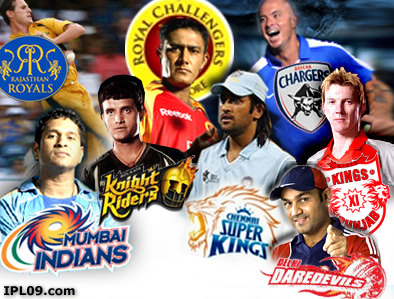
The first season of the Indian Premier League commenced on 18 April 2008 in India, and ended on 1 June 2008 with the victory of the Rajasthan Royals against Chennai Super Kings in the final at the DY Patil Stadium, Navi Mumbai.
As the second season of the IPL coincided with multi-phase 2009 Indian general elections, the Indian Central Government refused to provide the Indian paramilitary forces to provide security, saying the forces would be stretched too thinly if they were to safeguard both the IPL and the elections. As a result, the BCCI decided to host the second season of the league outside India. All 59 matches of the second season, abbreviated as IPL 2, took place in South Africa. Ironically, South Africa were also scheduled to have elections doing the IPL, however, the South African government provided adequate security for both the South African General Elections and the IPL.
When Bollywood and cricket met, the result was IPL and it was truly entertaining to see one’s favorite cricketer as well the Bollywood star on the same platform. IPL was no doubt an entertaining one. Super stars like Shah Rukh, Preity, Akshay, Katrina, Hrithik had been a source which provided a lot of glam to IPL promotion.
To attract the cricket fans, even team-owners have started selling tickets personally. Preity Zinta, the co-owner of Kings XI Punjab and Australian pace man Brett Lee sold the tickets along with their autographs.
The IPL is predicted to bring the BCCI income of approximately US$ 1.6 billion, over a period of five to ten years. All of these revenues are directed to a central pool, 40% of which will go to IPL itself, 54% to franchisees and 6% as prize money. The money will be distributed in these proportions until 2017, after which the share of IPL will be 50%, franchisees 45% and prize money 5%. The IPL signed up Kingfisher Airlines as the official umpire partner for the series in an Rs.106 Crore’s (1.06 billion) deal. This deal sees the Kingfisher Airlines brand on all umpires’ uniforms & also on the giant screens during third umpire decisions. Sony Entertainment Television signed a new contract with BCCI with Sony Entertainment Television paying a staggering Rs.8700 Crore’s (87 billion) for 10 years.
Wednesday, March 30, 2011
Difference between Advertising &Marketing
You will often find that many people confuse marketing with advertising or vice versa. While both components are important they are very different. Knowing the difference and doing your market research can put your company on the path to substantial growth.
Let's start off by reviewing the formal definitions of each and then I'll go into the explanation of how marketing and advertising differ from one another:
Advertising: The paid, public, non-personal announcement of a persuasive message by an identified sponsor; the non-personal presentation or promotion by a firm of its products to its existing and potential customers.
Marketing: The systematic planning, implementation and control of a mix of business activities intended to bring together buyers and sellers for the mutually advantageous exchange or transfer of products.
After reading both of the definitions it is easy to understand how the difference can be confusing to the point that people think of them as one-in-the same, so lets break it down a bit.
Advertising is a single component of the marketing process. It's the part that involves getting the word out concerning your business, product, or the services you are offering. It involves the process of developing strategies such as ad placement, frequency, etc. Advertising includes the placement of an ad in such mediums as newspapers, direct mail, billboards, television, radio, and of course the Internet. Advertising is the largest expense of most marketing plans, with public relations following in a close second and market research not falling far behind.

The best way to distinguish between advertising and marketing is to think of marketing as a pie, inside that pie you have slices of advertising, market research, media planning, public relations, product pricing, distribution, customer support, sales strategy, and community involvement. Advertising only equals one piece of the pie in the strategy. All of these elements must not only work independently but they also must work together towards the bigger goal. Marketing is a process that takes time and can involve hours of research for a marketing plan to be effective. Think of marketing as everything that an organization does to facilitate an exchange between company and consumer.
Friday, March 4, 2011

That’s why; partition is probably life’s one of the most traumatic shakeups, which challenges one’s survival, immediately, where the person’s sex, caste, creed, colour, religion, etc. remain simply inconsequential.
Though a partition sends away one’s life to astray with utmost disdain and ruthlessness and impacts lives of men and women alike; still it affects and, to some extent, infects the women’s health and psyche, bringing unthinkable and unbearable pain and agony to them.
As a matter of fact, what Nita, her mother and her sister had gone through – as picturised in the movie ‘Meghe Dhaka Tara’ – by falling prey to the evils of the partition of India is not at all an alienated phenomenon to the women of today who also delve deeper into such feelings and pathos in their respective lives, thanks to many partitions and borders which they need to break... to go beyond. Either being different from Nita, her mother and sister or being totally indifferent even towards self.
When all that happens somewhere, sometimes, unnoticed, Sharmila Maiti thought of getting behind the lens to let her, as well as every woman’s senses mingle with ours. And, since 2010 incidentally happens to be the 50th year of the movie ‘Meghe Dhaka Tara’, Sharmila chose to salute and commemorate this masterpiece of Late Ritwick Kumar Ghatak in her own parlance of cinema, which would go BEYOND BORDERS.
BEYOND BORDERS is not just a typical documentary film having a retro-effect to talk aloud in Ritwick’s language; instead, it’s the docu-fiction by a today’s Nita whom we rather know as Sharmila.
Not to mention, BEYOND BORDERS was already selected for International Conference of Cinema 2010 in February. It was also screened as the inaugural film at International Womens’ Day film festival in Kolkata and Pune. It was selected for Haryana International Film Festival too. And now, it is going to be screened at Kolkata Film Festival 2010 – the biggest non-competitive film festival in the world. It has also earned the brownie points from the Indian select for Venice Film Festival.
Given this, the DVDs of BEYOND BORDERS are about to be launched soon. These DVDs comprise of priceless and never-before-heard interviews of the three actresses: Supriya Devi, Gita Dey and Late Gita Ghatak (who went to her heavenly abode shortly after the shooting, so Sharmila’s film captured the last days of this cult Rabindra Sangeet singer & actress), making of the film and some interesting tidbits. Thus, for the reason obvious, each of the DVDs is going to be a pride and prized possession or collector’s item to the connoisseurs of movie and entertainment.
So, go BEYOND BORDERS notwithstanding every partition in life, for, the name of the game is ONLY survival, and '…still we survive'!
Saturday, February 26, 2011
Pillar of Brand Success
Mystery lies in Branding for many small to mid-market (SMB) companies. There are many opinions and methods as to how best approach it.
Top creative agencies have their own “proprietary” methods for crafting brand strategies. They have to, in order to position themselves against competing agencies. They use cool-looking graphics: circles, triangles, and flow charts to illustrate attributes, values, personality traits, and promises.
Deep down, SMB marketers know they should be putting more effort into branding, but many don’t know where to start.
The good news is, if you were to break down most agencies’ proprietary branding methods, you’d find many similarities.
If you’re one of the 90% of companies that don’t have the budget to hire top agency talent for your branding, don’t worry; with a little elbow grease and a good plan you can create brand Strategy with Mid size Agencies . Solving the branding black box just takes a little learning and a strong commitment.
Brand Architecture is Your Brand Strategy Foundation
The key to your entire brand strategy is your brand architecture. Your brand architecture sets the foundation for all the other components of your brand, and aligns your brand personality traits, your means, your promise, your story, and your visual and operational requirements into a single unified structure.
Brands play on our emotions, so your brand architecture should uncover the specific emotions around which you might build your brand.
To create your brand architecture, follow this five step process:
1. Start by listing each of your product/service features. Then, list the benefits of each.
A feature is an element of what something does or what it is. For example, a car’s features may include a ski rack and an upgraded stereo system.
A benefit is a positive result that the feature delivers.
2. Now focus on the benefits. For each one, determine whether it’s functional or emotional.
A functional benefit is directly related to the functionality of the feature. Example: An upgraded stereo provides higher-quality sound.
An emotional benefit is one that evokes a feeling or emotion. Example: An upgraded stereo might make the user feel like a rock star.
3. Next, review each feature and benefit individually, and determine its level of importance to the market. Assign each to one of three categories:
Expected: These are basic and expected; a customer won’t buy without these features or benefits. Every product/service in this category must offer these features.
Adds value: Not expected, but most customers probably won’t purchase based on this factor alone. Nevertheless, it helps differentiate your product/service from those of your competitors.
Will buy: Customers will choose you over your competitors based on this feature/benefit alone – it’s just that valuable.
4. Few brand architectures are built around features, but by including them in the rankings, we emphasize the importance of focusing on benefits and, more specifically, emotional benefits that cause people to desire your offering on a visceral level. The final step is to identify the emotional benefits that will become the core of your brand strategy.
Typically, you should focus on the highest rankings for the architecture of your brand. Evaluate all of those with a ranking of 6 or higher. You might decide to include a few functional benefits with the emotional benefits.
Carefully consider the functional or emotional benefits you select for your brand architecture. You’ll spend a lot of resources to convey these to the marketplace, so test them amongst your team and your market if you’re unsure.
After you’ve decided on your brand architecture, you can begin thinking about the other components of your brand strategy: your brand personality traits, your means, your promise, your story, and your visual and operational requirements
Tuesday, February 15, 2011
A good name is better than riches. Don Quixote
The Datsun –Becomes –Nissan Story
In 1918 a Japanese automobile firm soon to become Nissan produced a two –Seat automobile they called Datson ---“the son of Dat”. In part an acronym, this name reflected the initials of a car’s three main financial backers: Den, Aoyama, and Takeuchi. The name was later changed to Datsun, in part to avoid confusion with a similar word which in Japanese meant “to lose money”
When the firm returned to making cars after World War II , they chose to market them in Japan under the name Nissan .However, in 1961 the U.S car market was entered under the old Datsun name –perhaps in part to minimize the Japanese relationship . By 1981 the name Datsun was used not only in the U.S. but in many other countries, even though the firm was marketing it’s cars , trucks , and other products under the name Nissan in Japan . In fact, the awareness level of Nissan in the U.S .was only 2% as compared to 85% for Datsun name. The decision to change the name from Datsun to Nissan in the U.S was announced in the fall of 1981. The rationale was that the name change would help the pursuit of a global strategy. A single name worldwide would increase the possibility that advertising campaigns , brochures , and promotional materials could be used across countries and simplify product design and manufacturing .Furthur potential buyers would be exposed to the name and product when travelling to the other countries .
During the year 1982 -1984 the change was implemented. The products were changed gradually. On 1982 model the Nissan name appeared on the cars Front Grill while the rear carried the Datsun name on the left and the Nissan name on the right . Other Datsun models simply had “by Nissan” tagline. A lot of cars were thus sold with both names on them. 1983 some models were switched over completely. For example with the 1983 model of Datsun 510 was replaced by the Nissan Stanza. It wasn’t until 1984 line that the entire transition was completed
Advertising was of course the corner stone of the name –change effort. The successful “Datsun :We Are Driven “ which was initiated in 1977 and had a $60million budget in 1981 , was dropped . In its place appeared a “Come Alive , Come and Drive: Major motion from Nissan “ and “Major Motion :The Name Is Nissan “ set of campaigns supported by a budget which grew $120million in 1983 to $180million in 1987 . Around $240 million was estimated spent on advertising implementing the “The Name Is Nissan”campaign . The enlarged advertising budget was undoubtedly in part due to the added mission :to register the new name. It seems very likely that “the Name Nissan “campaign with its name registration mission was considerably less effective than the successful Datsun campaign it replaced.
The most incredible aspect of this story is the resilience of the Datsun name. In the spring of 1988, a national survey found that the recognition and esteemed of Datsun name was essentially the same as that of the Nissan name, despitr the irtual absence of the Datsun name from the commercial scene for Five years , and money effort placed behind the Nissan name.
The greatest potential cost of the name change was the bottom-line effect upon sales . Nissan saw its sharp drop from 5.9% in 1982 to 5.5% in 1983 and 4.5% in 1984 –a loss of 1:4 share points as compared to the 0.9% share points that Toyota lost during the same period . However during the time period there also were import restrictions, some quality problem with the Nissan Line and growth in the Honda Line . Thus it is impossible to determine precisely to what extent the sharp drop was caused by confusion of the name change ---yet that surely was a contributory factor of some notable degree.
The cost to change the name could have easily have exceeded half a billion dollar and probably was much more . First it is known that the operational cost, including changing signs at the 1, 100 dealership, cost around $30million . Second one may assume that $200 million was spent in advertising between 1982—1984 because of the name change, and that $50million was wasted because the “Datsun We Are Drive” campaign was prematurely stopped. Finally, assume even that .3% market share was lost for three years period because of the buyer confusion. That loss alone would represent many hundreds of millions of dollars in marginal profit. And the cost would go much higher if the reasonable assumption were made that the name change has had effects that lingered into the nineties
THE
Friday, January 7, 2011
Luxury A WAY OF LIFE
Dressed for the occasion, you face a group of equally polished people across the negotiating table. They grill you on your background, your career, your income and your prospects. Satisfied with your replies, they sit back and smile. You are in.
Is this a job interview? A visa application? Perhaps a matrimonial enquiry? Actually, it's "none of the above". This is a potential luxury homeowner being vetted before his purchase is approved.
For hundreds of years, something defined as "luxury" was something that was so well produced, so exclusive, and thus so expensive, that only the few - the elite - had access and the financial means to afford to buy it. Luxury was marketed to the rich as being a part of their social fabric, and to everyone else as being nothing more than an aspirational ideal.
Along the way, the democratization of "luxury" has lead to an erosion of what the word "luxury" truly represents in today's marketplace. As luxury brands diversify, what was perceived as luxury is no longer all that exclusive as it's now accessible to all.
Here's an interesting stat - As of last year, 40% of the Japanese population own at least one product made by Louis Vuitton.
40%!
Because of this, the Japanese account for over 40% of all luxury sales, more than Americans (17%) and Europeans (16%) combined.
So today's prospective of Luxury is Brands and logos .
Subscribe to:
Posts (Atom)