Thursday, March 10, 2016


           Sunshine  of Alicias Life


2015 July  , Alicia  get a professional request to connect in linkedin with a guy who is based  in Alabama interested to know whether she can consult his company   am interested  for building strategy document for their brands . Had no clue how will this professional request alter her  life completely .
Though she have accepted the request after 3 months in September  .. He came as a Storm in her life , swept her away in every way . Fell in love with this unknown  person without even meeting him . He became the centre of her life . He became her life , every step , every moment , every breath she  took and taking is to do with him . She  asks herself  have” I met you before “? Do  I know  you ? This feels so right? This feels like I am home ,  I know him for years . I dont love him for anything particular . I love him and accept him the way the way he is and the way he is not .  Opportunities come time a dozen every day and   it does make her  think why can’t she  move on from this guy , what does hold her  to be so deeply involved with him ?she cant  get an answer . So she have stopped asking this question to herself , completely .
It sounds weird . He wakes  up every morning  in her thoughts , She  closes  her  eyes seeing him in the night .   She  enjoy whatever moments she  get with him , she  capture them in her heart  and cherish them she loves to argue with him ,read with  him fight with  him as well as strict with him . She loves to disagree with him , and agree with him , so does he .Its completely  Paradoxical .
There is deep friendship where they  stand for each other. Never thought someone will come in her life and give her  smile and pain together in this format .
The day she  kissed him for the 1st time it seemed like she  have kissed him before, the lips the  saliva all felt like she  knows  it I have felt it before. When she  made Love to him it seemed like being one .

Today  all the moments which she  gets  with him she  cherishes it .   


Monday, January 16, 2012

Business is like a Rubik Cube

Everyone knows what a Rubik's Cube is. You, know the puzzle that you have to try to solve by getting all the colours on the same side. Some people have dedicated their lives to solving them. Others have become professional cubists. Still others spend years just trying to solve one side But the interesting thing is that the Cube is an allegory for life.
So an effective framework for differentiating a business’s value should start with a powerful positioning statement: a memorable, impactful, concise sentence that tells people what you do, how you are different and what value you will provide to them. If your salespeople are not able to deliver this top-line sales pitch - and have the recipient understand it in the time it takes to go up two flights on an elevator - it is not effective and needs to be redeveloped.
In the instance where the elevator gets stuck or the ride simply takes longer than it should, your salespeople should also be armed with fact-supported differentiating messages to further persuade, if necessary. These pointed, concise, powerful statements must support the corporate positioning statement and help to prove its viability and legitimacy. These assertions should be no more than one sentence each. Behind each of these messages must be supporting proof points to legitimize each key claim. The key is to have several layers of ammunition to prove your business’s worth to a potential client and to make your product or service stand above the competition’s.
Following each key message and its supporting proof points should be a customer value statement (or value proposition). This one or two sentence statement clearly articulates to the potential customer what value your product or service will offer them.
Positioning Statements – top line business message designed to stake a claim in the industry and position how customers should perceive the company.
· For example:
– We are the world’s largest…
– Our company provides senior citizens with the cheapest…
Key Messages – Differentiating claims based on the business or its key products, services, etc.
· For example:
– Our XYZ product is used today by 67 of the Fortune 100 companies.
– Each member of our management team has successfully launched an initial public offering (IPO).
Value Propositions – Statements describing customer value based on the claims made by key messages and positioning statements.
· For example:
– With key message: Our XYZ product is used today by 67 of the Fortune 100 companies.
§ Value proposition might be: You can feel assured that our technology is proven and will work as described.
– With key message: Each member of our management team has successfully launched an initial public offering (IPO).
§ Value proposition could be: Your money is being put into the hands of a company led by entrepreneurs with a history of success.
This type of “messaging hierarchy” is essential in business, unless you are taking a lowest-cost provider position. This is especially true in the business-to-business marketplace, where the value of products and services is not always apparent.
With a complete messaging framework established, an organization has the ammunition needed to effectively differentiate itself from the competition when competing for clients, new hires and leveraging in public relations news copy.

Friday, December 16, 2011

Brand management: “LET US CONSIDER ALL OF US AS HUMANS

Brand management: “LET US CONSIDER ALL OF US AS HUMANS: A little child playing cricket with brother and his friends !! Suddenly Mama calls , “Jhupa come up your friends from school is here t...

“LET US CONSIDER ALL OF US AS HUMANS

A  little  child playing cricket with brother and his friends !! Suddenly Mama calls  , “Jhupa come up your friends from school is here to play with you . Jhupa the little girl sulks and then  here she goes to  play  with girls “Doctor game with Barbie doll ! That s  how we all grew up juggling between where do we stand today in terms of society !!Though I did both , played cricket as well as played with Barbie Doll !! The art of  multithinking &Multitasking starts  up from the age of 5 . where you see you mother  doing 10 things at the same time  and we  replicate the same , as well as take positives of Father

In todays scenario we have more and more woman reaching the C level position in organization and managing life , family , husband all of that together , all his possible !!

IIGlobal a company who recognizes talents and provides a platform for only C level woman and Entrepreneurs to come close an network with each other as well as give them the recognition in a form of award . This year  the 3rd edition of Woman leaders  Conference held in Mumbai on 8th and 9th of Dec at the prestigious Taj Mahal Hotel Mumbai !!
Two days of  discussion , exchanging of notes , challenges  etc , But to consider today the I way I look at it ! Both Men and Women  has equal role to play in any environment  , be it your office , home , social life , business etc , So we need to seek this as an opportunity to make the best  of both the genders ! “LET US CONSIDER ALL OF US AS  HUMANS “ NOT ONE AGAINST THE OTHER , IT IS ONE WITH THE OTHER .

So few woman were recognized in the 3rd edition  of Women Leader Conference . Fortunately I was one of them .


I have won  the Best Runner up award in the Woman Consultant Category  -2011

Here are few pics of the Event as well as the award .


Anuradha  Challu -Director -HR PEPSICO  INDIA REGION
Shweta Shukla  -Associate Director &Head External  Relations


Monday, November 21, 2011

Where do we Begin -Guerrilla Marketing !!

If there’s any correct time to start, it’s right now. If there’s any proper place, it’s right where you are. You’ll never feel you are completely ready, so you may as well begin immediately.

If there’s any secret to be learned, it’s the secret of taking action and never stopping. You’ve heard Diana Ross sing when she was a member of The Supremes. Hear now what she says about taking action: "You can’t just sit there and wait for people to give you that golden dream; you’ve got to get out there and make it happen for yourself."
It’s wise to think of your marketing the same as you think about your rent. You pay it and never think twice. It’s also wise to think of your marketing as breathing. You couldn’t exist with only one breath, or even two or three. Don’t think you’re going to attract a new customer with only one effort, or even two or three. You keep breathing and stay alive. You keep marketing and stay profitable.

Many business owners realize the simplicity of marketing, but just don’t know where they should begin. Analysis paralysis stops them in their tracks. So many tasks. Where to start? So they don’t start. They know what they must do, but don’t really have a plan, so they make disconnected efforts to achieve a hazy goal. When they don’t see encouraging results right off the bat, they lose confidence, if any existed in the first place.


Michael Eisner, chairman and CEO of Disney, and the man who propelled it to undreamt of success, says, "At a certain level, what we do at Disney is very simple. We set our goals, aim for perfection, inevitably fall short, try to learn from our mistakes, and hope that our successes will continue to outnumber our failures." There’s nothing Mickey Mouse about that kind of philosophy -- because it embraces mistakes as part of the process.

The marketing world has changed because it has shrunk rather than expanded. Again, credit technology for the shrink job, accomplished not as much by the jet as the net. Marketing has also become a lot more technical. But that doesn't mean you have to be technical -- because technology has met you more than halfway by becoming much easier to use and even easier to pay for.


Guerrillas welcome the changes as much as they welcome the status quos. They are fully alert to what has changed and what must never change. They know well the difference between change and improvement. Analysis paralysis is a condition that has been eliminated in their world.

Wednesday, October 19, 2011

Humour appeal in advertising

Humour generates feelings and pleasure and for this reason it has a potential for the feeling to become associated with the brand and affect consumer attitude towards the brand and probably its image . Humour can also affect information processing by attracting attention ,improving brand name recall , creating a pleasant mood and reducing the chances of counter arguing. The positive side of humour ads can be summed up on the following points
1)Humour attracts attention

2)Humour can help increase ad message retention

3)Source credability can be enhanced by humour

4)Humour may diminish the counter argument  because  it distracts audience  from making cognitive  responses

Tuesday, May 17, 2011

Live Monaco F1 Grand Prix at Tote, Mumbai

To make Monaco the “Next Destination” for the Indian high class traveler by bringing to him a glimpse of the city through the famous Monaco Grand Prix .
About Monaco.

Monaco located in the South western Europe, on the North Central coast of the Mediterranean Sea and is surrounded by France from 3 sides and Italy just 16 km away.
Known for its high life, fine architecture, night life, casino’s and of course the Grand Prix and Monte Carlo Rally…it could be the best choice for a luxurious getaway for the rich and famous .

Monaco Formula 1 Grand Prix is known as the most significant and famous automobile races in the world, with its narrow course laid out in the streets of Monaco, making it one of the most challenging tracks in Formula One
Triple Formula One champion Nelson Piquet was fond of saying that racing at Monaco was "like trying to cycle round your living room", but added that "a win here was worth two anywhere else".
The Big Idea

Corner seat invitation for participants and their friends for the Monaco Grand Prix with French hospitality and entertainment
USP of the Event
Get a sneak preview of the luxurious& glamorous lifestyle of Monaco within a few hours .
Who will be Attending

      Primary
    HNI’s - People who are capable of spending €1000 per day during their next personal/business travel
        C level employees of mid and small cap organizations
    Crème de la crème for imparting snob value during PR
      Secondary
    F1 enthusiasts.
Entertainment French Style
 
       MONACO - the "Chic" experience
       Before the race starts a classy dance sequence
     Sitting at a table with a colourful cocktail a beautiful lady is enjoying the race and the party organized for the event (sounds of cars passing and people talking at the party). A gentleman, mesmerized by her beauty tries to impress her with a very elegant and romantic solo dance number. First shy, she finally gives in and joins him in a very sensuous and graceful partner dance sequence with elements of jive, French tango and salsa on French lounge music
       Duration 12-15 min
       2 dancers – 1 female & 1 male (French national; dancer, actor, choreographer, writer, painter & Director of the IN STEP Dance Company)


Wednesday, May 4, 2011

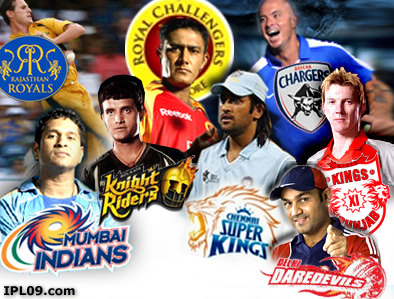
Brand management: The World Integrates through Cricket--IPL

Brand management: The World Integrates through Cricket--IPL: "IPL – The Indian premier league has taken the cricketing world by storm. It has also got its marketing mix spot on. TV, Internet, Newspaper..."

The World Integrates through Cricket--IPL

IPL – The Indian premier league has taken the cricketing world by storm. It has also got its marketing mix spot on.
TV, Internet, Newspapers… Every medium is flooding with DLF IPL, a private event; that above all, explains the success of Indian Premier League. For a private event, entire media is fighting to give free of cost coverage! Strange, but Interesting! So what marketing and branding strategy has worked in favour of IPL?
One, “Packaging of the Event” from day 1 as entertainment is the biggest strategic hit. It structured teams around states thereby ensuring team and brand loyalties and assured eyeballs when it comes to media.
The first season of the Indian Premier League commenced on 18 April 2008 in India, and ended on 1 June 2008 with the victory of the Rajasthan Royals against Chennai Super Kings in the final at the DY Patil Stadium, Navi Mumbai.

As the second season of the IPL coincided with multi-phase 2009 Indian general elections, the Indian Central Government refused to provide the Indian paramilitary forces to provide security, saying the forces would be stretched too thinly if they were to safeguard both the IPL and the elections. As a result, the BCCI decided to host the second season of the league outside India. All 59 matches of the second season, abbreviated as IPL 2, took place in South Africa. Ironically, South Africa were also scheduled to have elections doing the IPL, however, the South African government provided adequate security for both the South African General Elections and the IPL.

When Bollywood and cricket met, the result was IPL and it was truly entertaining to see one’s favorite cricketer as well the Bollywood star on the same platform. IPL was no doubt an entertaining one. Super stars like Shah Rukh, Preity, Akshay, Katrina, Hrithik had been a source which provided a lot of glam to IPL promotion.
To attract the cricket fans, even team-owners have started selling tickets personally. Preity Zinta, the co-owner of Kings XI Punjab and Australian pace man Brett Lee sold the tickets along with their autographs.

The IPL is predicted to bring the BCCI income of approximately US$ 1.6 billion, over a period of five to ten years. All of these revenues are directed to a central pool, 40% of which will go to IPL itself, 54% to franchisees and 6% as prize money. The money will be distributed in these proportions until 2017, after which the share of IPL will be 50%, franchisees 45% and prize money 5%. The IPL signed up Kingfisher Airlines as the official umpire partner for the series in an Rs.106 Crore’s (1.06 billion) deal. This deal sees the Kingfisher Airlines brand on all umpires’ uniforms & also on the giant screens during third umpire decisions. Sony Entertainment Television signed a new contract with BCCI with Sony Entertainment Television paying a staggering Rs.8700 Crore’s (87 billion) for 10 years.


Wednesday, March 30, 2011

Difference between Advertising &Marketing

You will often find that many people confuse marketing with advertising or vice versa. While both components are important they are very different. Knowing the difference and doing your market research can put your company on the path to substantial growth.
Let's start off by reviewing the formal definitions of each and then I'll go into the explanation of how marketing and advertising differ from one another:
Advertising: The paid, public, non-personal announcement of a persuasive message by an identified sponsor; the non-personal presentation or promotion by a firm of its products to its existing and potential customers.
Marketing: The systematic planning, implementation and control of a mix of business activities intended to bring together buyers and sellers for the mutually advantageous exchange or transfer of products.
After reading both of the definitions it is easy to understand how the difference can be confusing to the point that people think of them as one-in-the same, so lets break it down a bit.
Advertising is a single component of the marketing process. It's the part that involves getting the word out concerning your business, product, or the services you are offering. It involves the process of developing strategies such as ad placement, frequency, etc. Advertising includes the placement of an ad in such mediums as newspapers, direct mail, billboards, television, radio, and of course the Internet. Advertising is the largest expense of most marketing plans, with public relations following in a close second and market research not falling far behind.
The best way to distinguish between advertising and marketing is to think of marketing as a pie, inside that pie you have slices of advertising, market research, media planning, public relations, product pricing, distribution, customer support, sales strategy, and community involvement. Advertising only equals one piece of the pie in the strategy. All of these elements must not only work independently but they also must work together towards the bigger goal. Marketing is a process that takes time and can involve hours of research for a marketing plan to be effective. Think of marketing as everything that an organization does to facilitate an exchange between company and consumer.

Friday, March 4, 2011

What is ‘partition’? Just a division between two parts of anything, or something which, for a change, might draw our attention because living itself is nothing but such a wide partition spread out between life and death! And this truth becomes even more evident, if you can experience how it feels to be separated, of course much against your will and wish from your land, values, principles, families, friends, and from everything, everyone you love in order to survive, at least, if not live the fullest.

That’s why; partition is probably life’s one of the most traumatic shakeups, which challenges one’s survival, immediately, where the person’s sex, caste, creed, colour, religion, etc. remain simply inconsequential.

Though a partition sends away one’s life to astray with utmost disdain and ruthlessness and impacts lives of men and women alike; still it affects and, to some extent, infects the women’s health and psyche, bringing unthinkable and unbearable pain and agony to them.

As a matter of fact, what Nita, her mother and her sister had gone through – as picturised in the movie ‘Meghe Dhaka Tara’ – by falling prey to the evils of the partition of India is not at all an alienated phenomenon to the women of today who also delve deeper into such feelings and pathos in their respective lives, thanks to many partitions and borders which they need to break... to go beyond. Either being different from Nita, her mother and sister or being totally indifferent even towards self.

When all that happens somewhere, sometimes, unnoticed, Sharmila Maiti thought of getting behind the lens to let her, as well as every woman’s senses mingle with ours. And, since 2010 incidentally happens to be the 50th year of the movie ‘Meghe Dhaka Tara’, Sharmila chose to salute and commemorate this masterpiece of Late Ritwick Kumar Ghatak in her own parlance of cinema, which would go BEYOND BORDERS.

BEYOND BORDERS is not just a typical documentary film having a retro-effect to talk aloud in Ritwick’s language; instead, it’s the docu-fiction by a today’s Nita whom we rather know as Sharmila.

Not to mention, BEYOND BORDERS was already selected for International Conference of Cinema 2010 in February. It was also screened as the inaugural film at International Womens’ Day film festival in Kolkata and Pune. It was selected for Haryana International Film Festival too. And now, it is going to be screened at Kolkata Film Festival 2010 – the biggest non-competitive film festival in the world. It has also earned the brownie points from the Indian select for Venice Film Festival.

Given this, the DVDs of BEYOND BORDERS are about to be launched soon. These DVDs comprise of priceless and never-before-heard interviews of the three actresses: Supriya Devi, Gita Dey and Late Gita Ghatak (who went to her heavenly abode shortly after the shooting, so Sharmila’s film captured the last days of this cult Rabindra Sangeet singer & actress), making of the film and some interesting tidbits. Thus, for the reason obvious, each of the DVDs is going to be a pride and prized possession or collector’s item to the connoisseurs of movie and entertainment.

So, go BEYOND BORDERS notwithstanding every partition in life, for, the name of the game is ONLY survival, and '…still we survive'!

Saturday, February 26, 2011

Pillar of Brand Success

Mystery lies in Branding  for many small to mid-market (SMB) companies. There are many opinions and methods as to how best approach it.

Top creative agencies have their own “proprietary” methods for crafting brand strategies. They have to, in order to position themselves against competing agencies. They use cool-looking graphics: circles, triangles, and flow charts to illustrate attributes, values, personality traits, and promises.

Deep down, SMB marketers know they should be putting more effort into branding, but many don’t know where to start.

The good news is, if you were to break down most agencies’ proprietary branding methods, you’d find many similarities.

If you’re one of the 90% of companies that don’t have the budget to hire top agency talent for your branding, don’t worry; with a little elbow grease and a good plan you can create brand Strategy  with Mid size Agencies . Solving the branding black box just takes a little learning and a strong commitment.

Brand Architecture is Your Brand Strategy Foundation


The key to your entire brand strategy is your brand architecture. Your brand architecture sets the foundation for all the other components of your brand, and aligns your brand personality traits, your means, your promise, your story, and your visual and operational requirements into a single unified structure.

Brands play on our emotions, so your brand architecture should uncover the specific emotions around which you might build your brand.

To create your brand architecture, follow this five step process:

1. Start by listing each of your product/service features. Then, list the benefits of each.

A feature is an element of what something does or what it is. For example, a car’s features may include a ski rack and an upgraded stereo system.
A benefit is a positive result that the feature delivers.
2. Now focus on the benefits. For each one, determine whether it’s functional or emotional.

A functional benefit is directly related to the functionality of the feature. Example: An upgraded stereo provides higher-quality sound.
An emotional benefit is one that evokes a feeling or emotion. Example: An upgraded stereo might make the user feel like a rock star.
3. Next, review each feature and benefit individually, and determine its level of importance to the market. Assign each to one of three categories:

Expected: These are basic and expected; a customer won’t buy without these features or benefits. Every product/service in this category must offer these features.
Adds value: Not expected, but most customers probably won’t purchase based on this factor alone. Nevertheless, it helps differentiate your product/service from those of your competitors.
Will buy: Customers will choose you over your competitors based on this feature/benefit alone – it’s just that valuable.
4. Few brand architectures are built around features, but by including them in the rankings, we emphasize the importance of focusing on benefits and, more specifically, emotional benefits that cause people to desire your offering on a visceral level. The final step is to identify the emotional benefits that will become the core of your brand strategy.

Typically, you should focus on the highest rankings for the architecture of your brand. Evaluate all of those with a ranking of 6 or higher. You might decide to include a few functional benefits with the emotional benefits.
Carefully consider the functional or emotional benefits you select for your brand architecture. You’ll spend a lot of resources to convey these to the marketplace, so test them amongst your team and your market if you’re unsure.

After you’ve decided on your brand architecture, you can begin thinking about the other components of your brand strategy: your brand personality traits, your means, your promise, your story, and your visual and operational requirements


Tuesday, February 15, 2011

A good name is better than riches. Don Quixote

                                        The Datsun –Becomes –Nissan Story

                                      
In 1918 a Japanese automobile firm soon to become Nissan produced a two –Seat automobile they called Datson ---“the son of Dat”. In part an acronym, this name reflected the initials of a car’s three main financial backers: Den, Aoyama, and Takeuchi. The name was later changed to Datsun, in part to avoid confusion with a similar word which in Japanese meant “to lose money”

When the firm returned to making cars after World War II , they chose to market them in Japan under the name Nissan .However, in 1961 the U.S car market was entered under the old Datsun name –perhaps in part to minimize the Japanese relationship . By 1981 the name Datsun  was used not only in the U.S. but in many other countries, even though the firm was marketing it’s cars , trucks , and other products  under the name  Nissan in Japan . In fact, the awareness level of Nissan in the U.S .was only 2% as compared to 85% for Datsun  name. The decision to change the name from Datsun to Nissan in the U.S was announced in the fall of 1981. The rationale was that the name change would help the pursuit of a global strategy. A single name worldwide would  increase  the possibility that advertising  campaigns , brochures , and promotional materials  could be used  across countries  and simplify  product design and manufacturing .Furthur potential  buyers would  be exposed  to the name and product  when travelling to the other countries .

During the year 1982 -1984 the change was implemented. The products were changed gradually. On 1982  model  the Nissan  name appeared  on the cars Front Grill  while the rear carried the Datsun  name on the left  and the Nissan  name on the right . Other Datsun models   simply had “by Nissan” tagline. A lot of cars were thus sold with both names on them. 1983   some models were switched over completely. For example with the 1983 model of Datsun 510 was replaced by the Nissan Stanza. It wasn’t until 1984 line that the entire transition was completed

Advertising was of course the corner stone  of the name –change  effort. The successful “Datsun :We Are Driven “ which  was initiated  in 1977 and had a $60million budget  in 1981 , was dropped . In its place appeared a “Come Alive , Come and Drive: Major motion  from Nissan “ and “Major Motion :The Name Is Nissan “ set of campaigns supported  by a budget which grew $120million  in 1983 to $180million in 1987 . Around $240 million was estimated spent on advertising implementing the “The Name Is Nissan”campaign . The enlarged advertising budget was undoubtedly in part due to the added mission :to register the new name. It seems very likely that “the Name Nissan “campaign with its name registration mission was considerably less effective than the successful Datsun campaign it replaced.
The most incredible aspect of this story is the resilience of the Datsun  name. In the spring of 1988, a national survey found that the recognition and esteemed of Datsun  name was essentially the same as that of the Nissan name, despitr the irtual  absence of the Datsun name from the  commercial scene for Five years , and money effort placed behind the Nissan name.
The greatest potential cost of the name change was the bottom-line effect upon sales . Nissan saw its sharp drop from 5.9%  in 1982 to 5.5% in 1983  and 4.5% in 1984 –a loss of 1:4  share points as compared to the 0.9% share points that Toyota lost during the same period . However during the time period there also were import restrictions, some quality problem with the Nissan Line and growth in the Honda Line . Thus it is impossible to determine precisely to what extent the sharp drop was caused by confusion of the name change ---yet that surely was a contributory factor of some notable degree.
The cost to change the name could have easily have exceeded half a billion dollar and probably was much more . First it is known that the operational cost, including changing signs at the 1, 100 dealership, cost  around $30million . Second one may assume that $200 million was spent in advertising between 1982—1984 because of the name change, and that $50million was wasted because the “Datsun We Are Drive” campaign was prematurely stopped. Finally, assume even that .3% market share was lost for three years period because of the buyer confusion. That loss alone would represent many hundreds of millions of dollars in marginal profit. And the cost would  go much higher  if the reasonable assumption were made that the name change  has had effects that lingered into the nineties


                             THE

Friday, January 7, 2011

Luxury A WAY OF LIFE

Dressed for the occasion, you face a group of equally polished people across the negotiating table. They grill you on your background, your career, your income and your prospects. Satisfied with your replies, they sit back and smile. You are in.
Is this a job interview? A visa application? Perhaps a matrimonial enquiry? Actually, it's "none of the above". This is a potential luxury homeowner being vetted before his purchase is approved.
For hundreds of years, something defined as "luxury" was something that was so well produced, so exclusive, and thus so expensive, that only the few - the elite - had access and the financial means to afford to buy it. Luxury was marketed to the rich as being a part of their social fabric, and to everyone else as being nothing more than an aspirational ideal.
Along the way, the democratization of "luxury" has lead to an erosion of what the word "luxury" truly represents in today's marketplace.  As luxury brands diversify, what was perceived as luxury is no longer all that exclusive as it's now accessible to all. 

Here's an interesting stat - As of last year, 40% of the Japanese population own at least one product made by Louis Vuitton.

40%! 
Because of this, the Japanese account for over 40% of all luxury sales, more than Americans (17%) and Europeans (16%) combined. 
So today's prospective of Luxury is Brands and logos .

Tuesday, December 14, 2010

GLOBAL vs LOCAL

When launching a product in a market  do you standardise or adapt your marketing mix to the market? A company can adopt to use a standardised marketing mix around the world or an adapted marketing mix in each country.


Standardisation Vs Adaption

So what should an organisation do? Adapt or sell a standardised product? Basic marketing concepts tell us that we will sell more of a product if we aim to meet the needs of our target market. In any markets ,we have to take into consideration consumers cultural background, buying habits, levels of personal disposable income etc in order to deliver a tailored marketing mix program to suit their needs.

The arguments however for standardisation suggest that if you go through the process of adapting the product to local markets it does little but add to the overall cost of producing the product and weakens the brand on the global scale. In today’s global world, where consumers travel more, watch satellite television, communicate and shop internationally over the internet, the world now is becoming a lot smaller. Because of this there is no need to adapt products to local markets. Brands such as Coca-Cola, MTV, Nike, Levis are all successful global brands where they have a standardised approach to their marketing mix, all these products are targeted at similar groups globally.

In many circumstances a company will have to adapt their product and marketing mix strategy to meet local needs and wants that cannot be changed. Mcdonald is a global player however, their burgers are adapted to local needs. In India where a cow is a sacred animal their burgers are served with chicken or fish. In Mexico burgers come with chilli sauce. Coca-cola is some parts of the world taste sweeter then in others. Yes we can argue that standardisation is better for the organisation because it reduces cost, however many organisations will have to ‘think global, but act local’ if they are to successfully establish them selves in foreign markets.


As with international product decisions an organisation can either adapt or standardise their promotional strategy and message. Advertising messages in countries may well have to be adapted because of language barriers or the current message used in the national market may be offensive to overseas residents.
The use of certain colours may also need to be thought about. In India red is the colour worn by the bride in weddings, white is the colour for mourning in Japan. The level of media development has to also be taken into account. Is commercial television well established in your host country? What is the level of television penetration? How much control does the government have over advertising on TV and radio? Is print media more popular then TV? Many organisation go for a strategy of adapting advertising messages to local markets to best meet consumer demand.


Global  Pricing Strategies

Pricing on an international scale is difficult. As well as taking into account traditional price considerations (see marketing mix pricing) i.e.:

Fixed and variable costs,

Competition,

Company objectives ,

Proposed positioning strategies,

Target group and willingness to pay,


the organisation needs to consider the costs of transport, any tariffs or import duties that may be levied on their product(s) when they are sold on the international scale. Also what currency do you expect to be paid in? Will it be home or international currency? Exchange rate fluctuation will also impact profitability and influence pricing decisions.

Other factors to consider include local incomes, what are income and PDI levels. What is the general economic situation of the country and how will this influence pricing?

The internet is now making pricing more transparent for consumers. Goods can be purchased online from any overseas organisations at local currency prices, a prime examples is dvd’s which are purchased from sites like www.dvdsoon.com which deliver internationally.

International Distribution Strategies

A standard distribution channel in the UK may go from a Manufacturer, wholesaler, retailer to consumer or direct from a manufacturer to a retailer. In an overseas market there may well be more intermediaries involved. For example in Japan there are approximately five different types of wholesaler a product goes through before the product reaches the final consumer. In your international market , is it dominated by major retailers or is the retail sector made up of small independent retailers? Is internet distribution common for your product.

Wednesday, December 8, 2010

How to Create a Brand Positioning for a Small Business--

While big corporations spend millions of dollars promoting their brands, few small businesses and startup companies have taken the time to rigorously determine their brand positioning. Dedicate several hours of time and you can develop a company positioning to differentiate your brand and speak with a unified voice to the market.
1) Block out three hours for the meeting and gather your key employees in a conference room.

2)Hire an outside consultant or nominate one employee to serve as the moderator and note taker to capture all the ideas the team develops.

3)Brainstorm, brainstorm, brainstorm. Make separate lists of the way you want to be perceived by customers, investors, employees, and shareholders.

4) Create an honest assessment of your company's unique value proposition. Think about how your competitors would attack this value proposition, if they were talking to your customers.

5) List positionings you wish to avoid. Do you not want your cookie store to be seen as the local bakery? Or vice versa?

6)Analyze how your competitors are positioning themselves. Is your business differentiated from them in a way your customers care about?
7)Synthesize the results of your brainstorming session a few days after the initial meeting. Use the results to develop your positioning statement and the associated corporate messaging it implies.
8)Test the new positioning statement on customers, employees, and investors to confirm you created a good positioning.
9)Create action items in establishing your brand in the market place for your team to accomplish. Start small with yellow page ad placement/copy, work towards a goal of propagating your brand's position in anything that relates to your company, including collateral, invoices, etc.